
Joomla OAuth Client
This document will walk you through the steps to configure Joomla as an OAuth client and Drupal as an OAuth server. By using the miniOrange OAuth Server module, you can enable seamless Single Sign-On (SSO) between Joomla and Drupal site, allowing users to log in to Joomla using their Drupal credentials. This module is compatible with Drupal 7, Drupal 8, Drupal 9, Drupal 10, as well as Drupal 11.
Configure Application in Joomla:
- Download the zip file for the miniOrange OAuth Client plugin for Joomla.
- Login to your Joomla site’s administrator console.
-
From the left Toggle Menu, click on System, then under the Install section click on Extensions.

-
Upload the downloaded zip file to install the Joomla OAuth Client plugin.
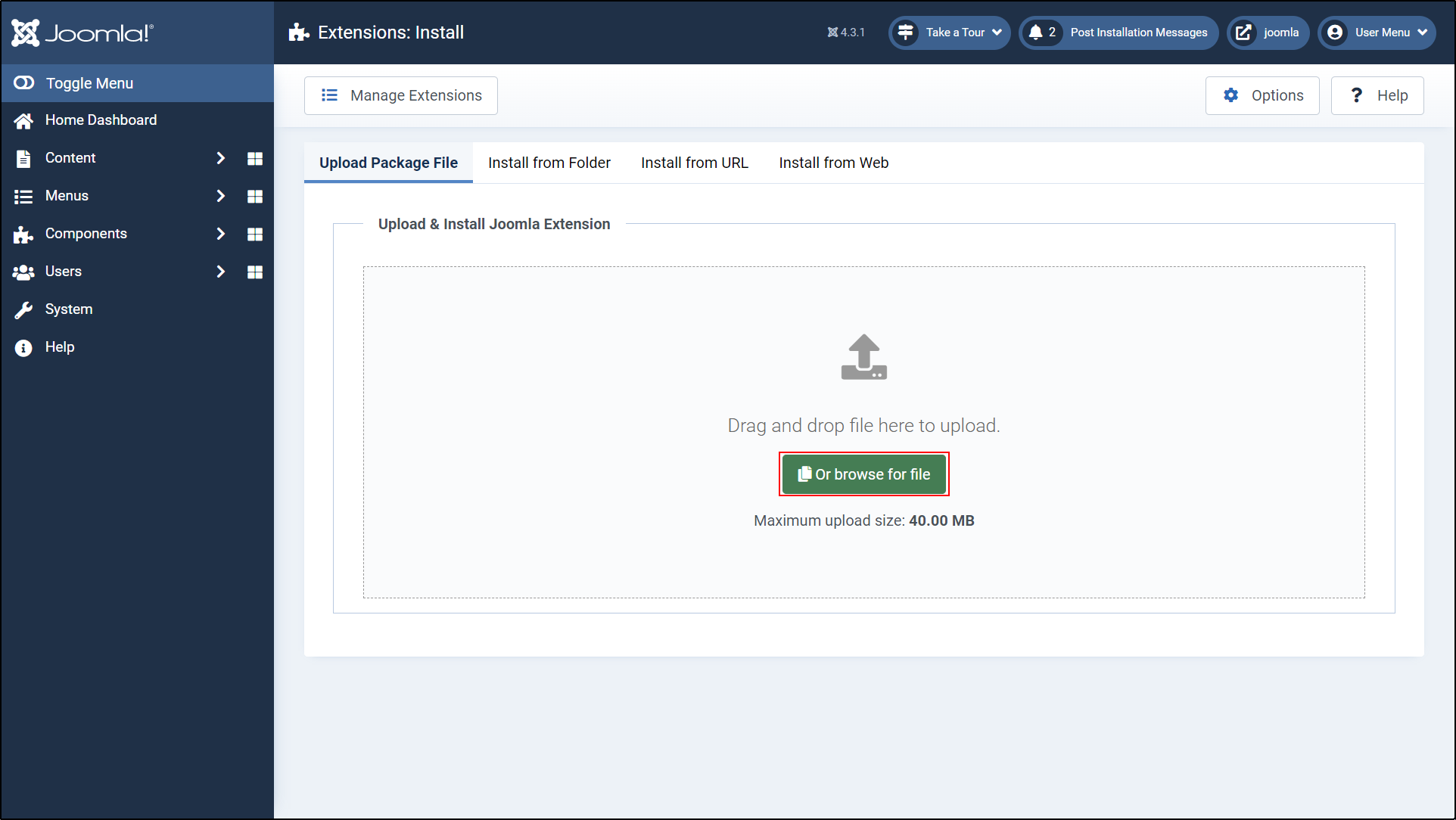
- From the left toggle menu click on Components, then click on miniOrange OAuth Client.
- Navigate to the Configure OAuth tab.
-
Under the Configure OAuth tab. Select your OAuth Provider.

-
Copy the Callback URL.
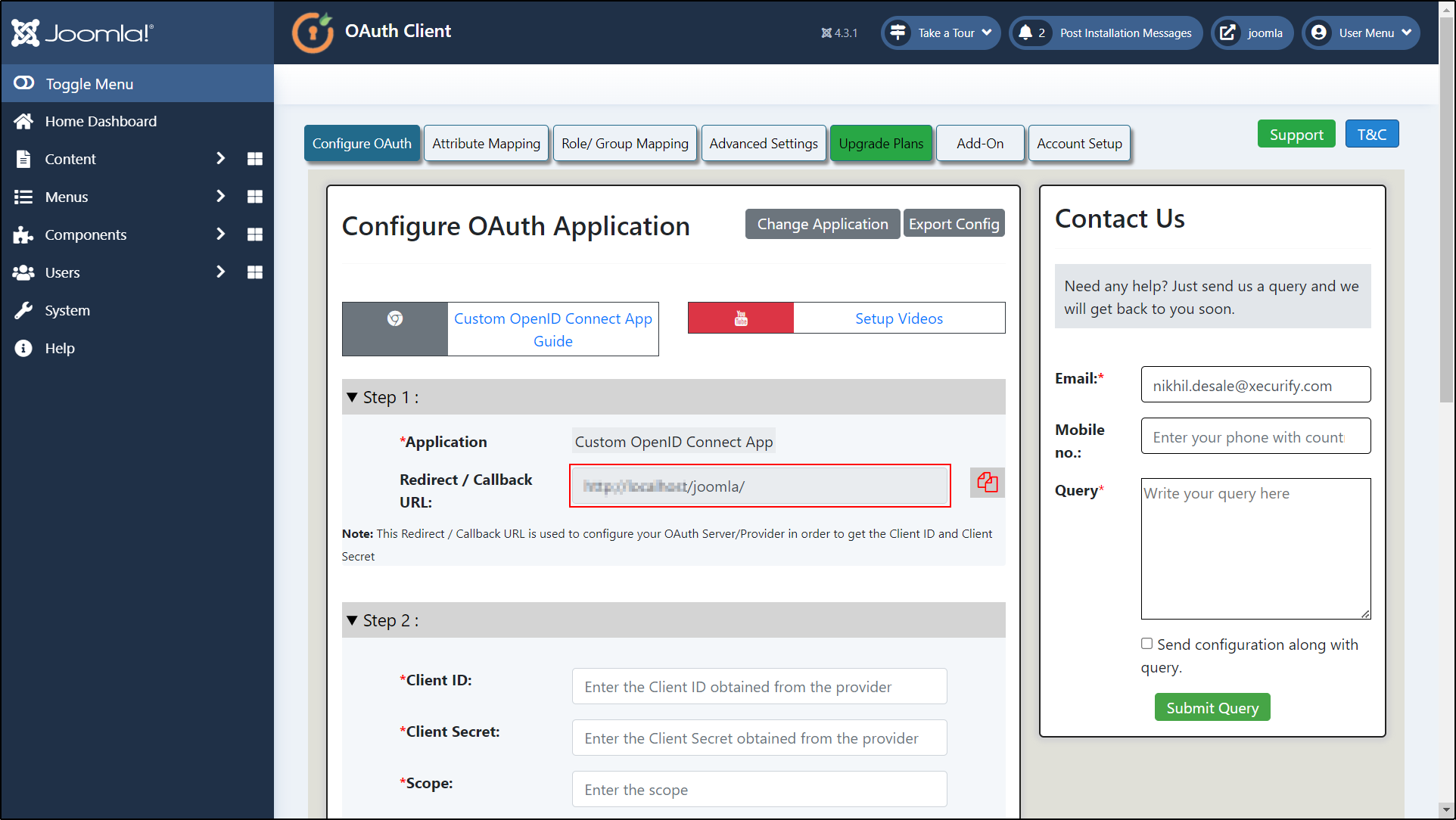
Configure Drupal as OAuth Server:
- Navigate to the Drupal site and go to the Configuration tab from the top navigation bar.
- Now, select the miniOrange OAuth Server Configuration.
- Click on the Add Client button.
- Enter the Application Name under the Application Name text field.
- Paste the copied Callback URL under the Callback/Redirect URL text field. You can add multiple Callback URLs by clicking on the Add More button next to the Callback/Redirect URL text field.
- Click on the Save button.
Configure Joomla as OAuth Client:
- Under the Configure Applications section in the Drupal site, copy the Client ID.
-
Navigate to the Joomla dashboard and paste the copied Client ID under the Client ID text field.
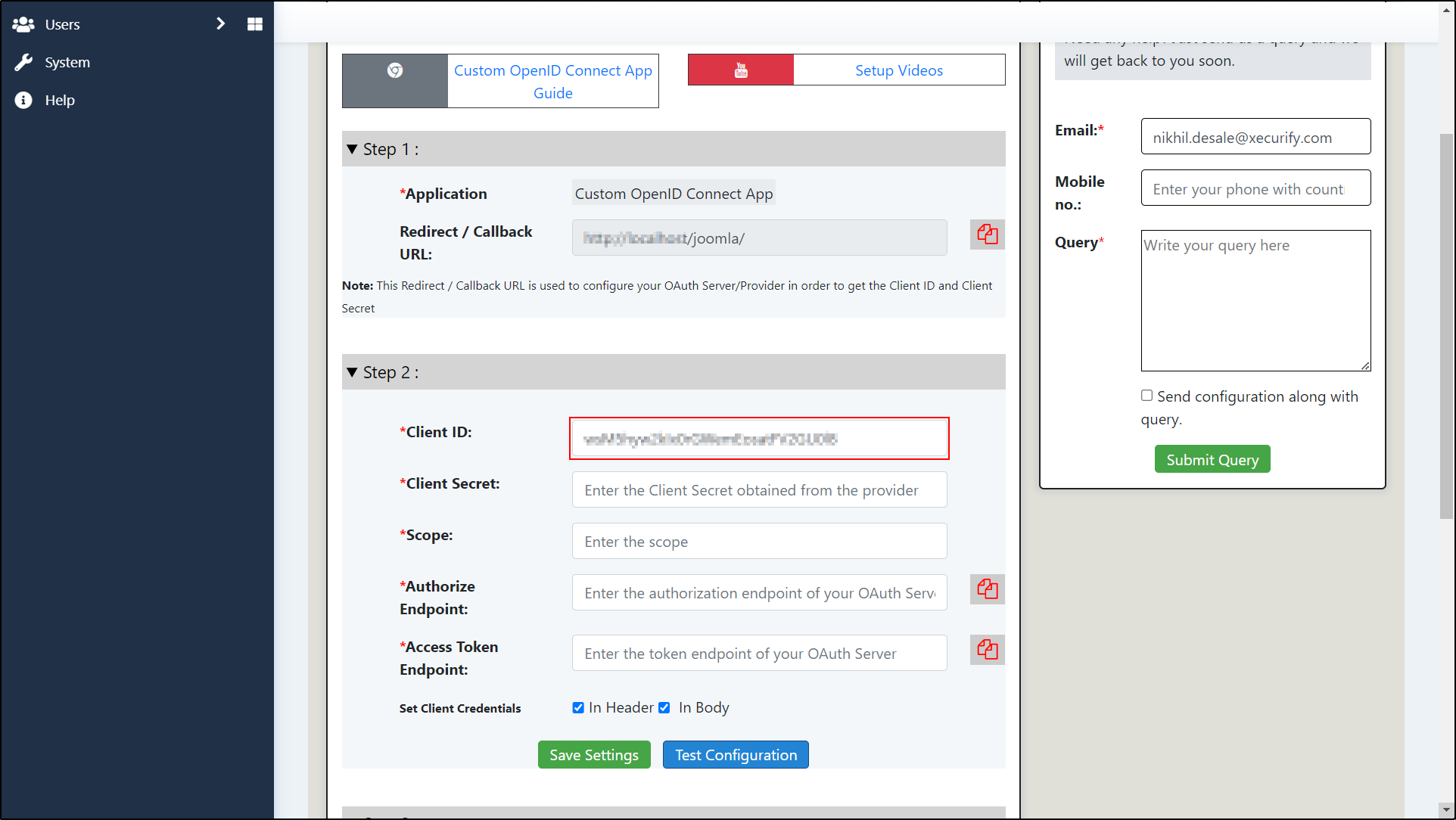
- Again navigate to the Drupal site and copy the Client Secret.
-
Paste the copied Client Secret under the Client Secret text field in the Joomla dashboard.
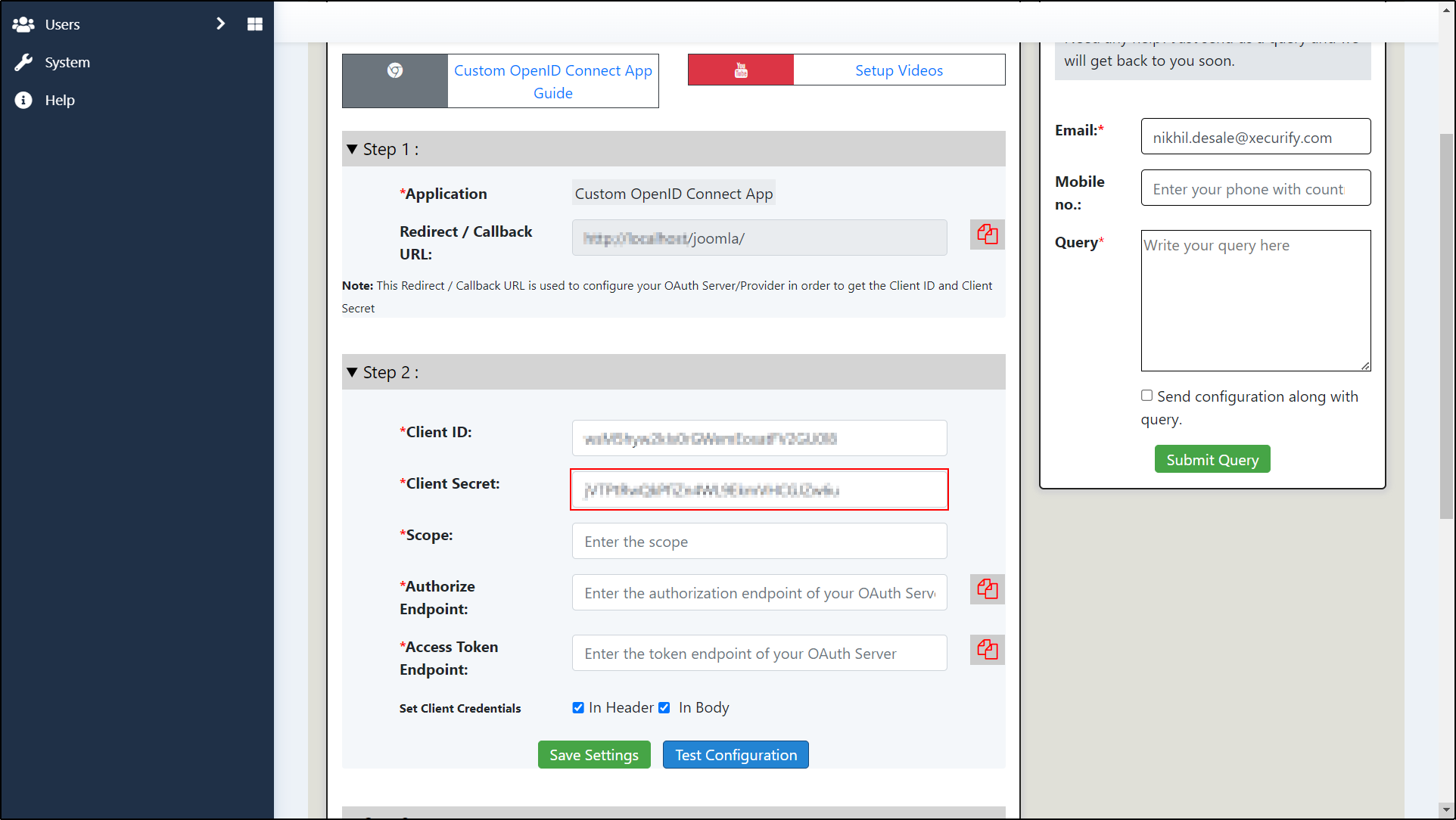
- Navigate to the Drupal site, scroll down to the Scope and Endpoints section, and copy the Scope.
-
Go back to the Joomla dashboard and paste the copied Scope under the Scope text field.

- Navigate to the Drupal site and copy the Authorize Endpoint.
-
Paste the copied Authorize Endpoint into the Authorize Endpoint text field in the Joomla dashboard.

-
Similarly, copy the Access Token Endpoint from the Drupal site and paste the copied Access Token Endpoint into the Access Token Endpoint text field in the Joomla dashboard.

-
Click on the Save Settings button.

-
Now, click on the Test Configuration button.

-
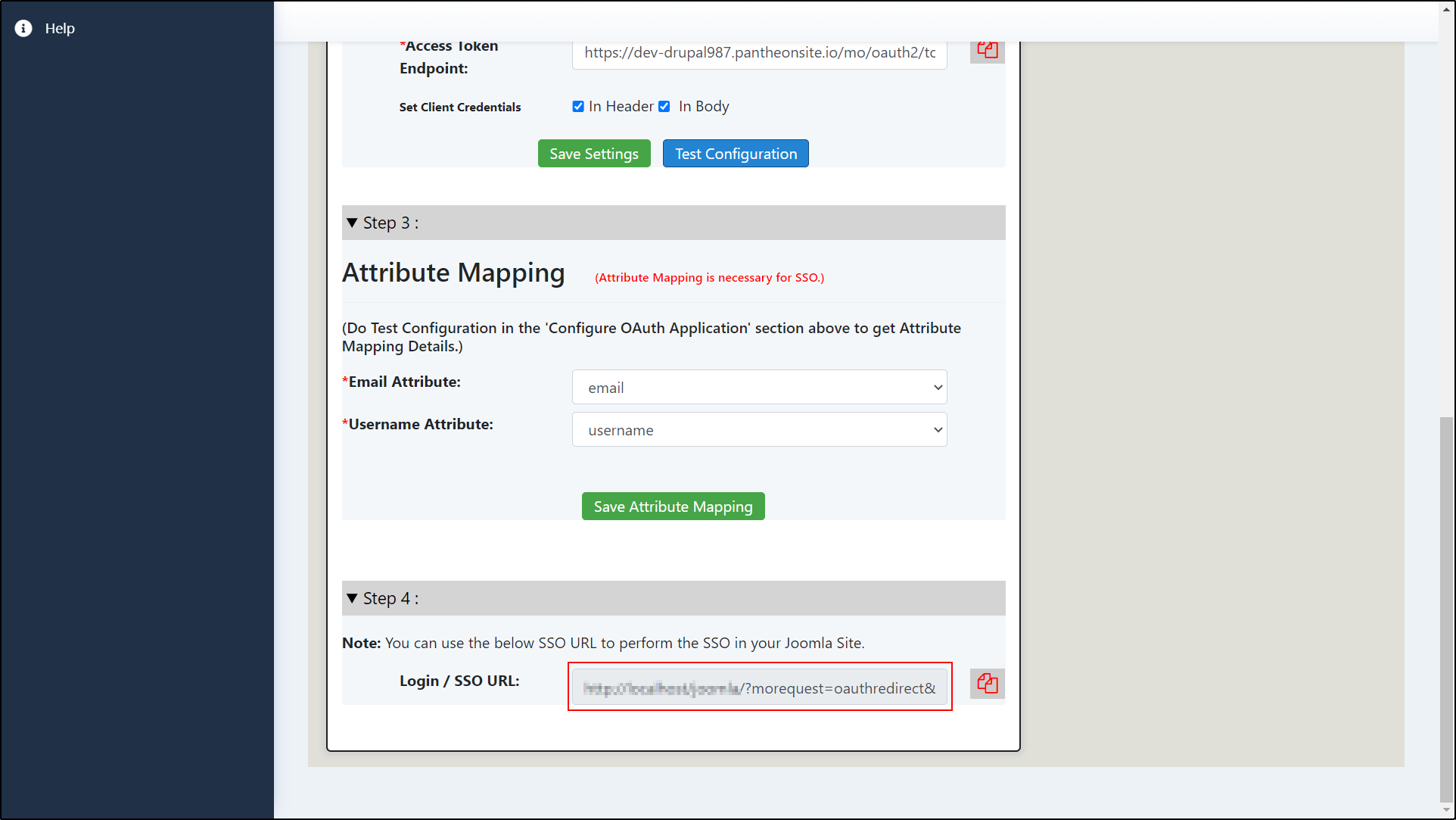
Once the test is successful, scroll down to the Attribute Mapping section and, from the Email Attribute dropdown, select the Drupal attribute that contains the user’s email.

-
From the Username Attribute dropdown, select the Drupal attribute that provides the user’s username.

-
Click on the Save Attribute Mapping button.

You have successfully configured Joomla as OAuth Client and Drupal as OAuth server.
Let’s see how this works:
-
Copy the Login / SSO URL from the Joomla dashboard.
- Open a new window/private browser and navigate to the link copied. It will redirect you to the Drupal login page.
-
Enter the Drupal Credentials and click on the Log in button.

- You will be logged into Joomla using Drupal credentials.
 Back to top
Help improve this page
You can:
- Log in, click Edit, and edit this page
- Log in, click Discuss, update the Page status value, and suggest an improvement
- Log in and create a Documentation issue with your suggestion

