
What is User Provisioning
Imagine you run a company, it is the hiring season, and you finally hire a batch of hundred employees. In order to grant access and permissions to all these employees taking into account their job roles and responsibilities, you need to create User accounts. These User accounts are managed such that only the applications, systems and services which are particular to a given employee can be accessed by them. The allocation of resources and granting of permissions through the traditional course of action would be consuming a tonne of manual labor and has a significant probability of being error-prone.
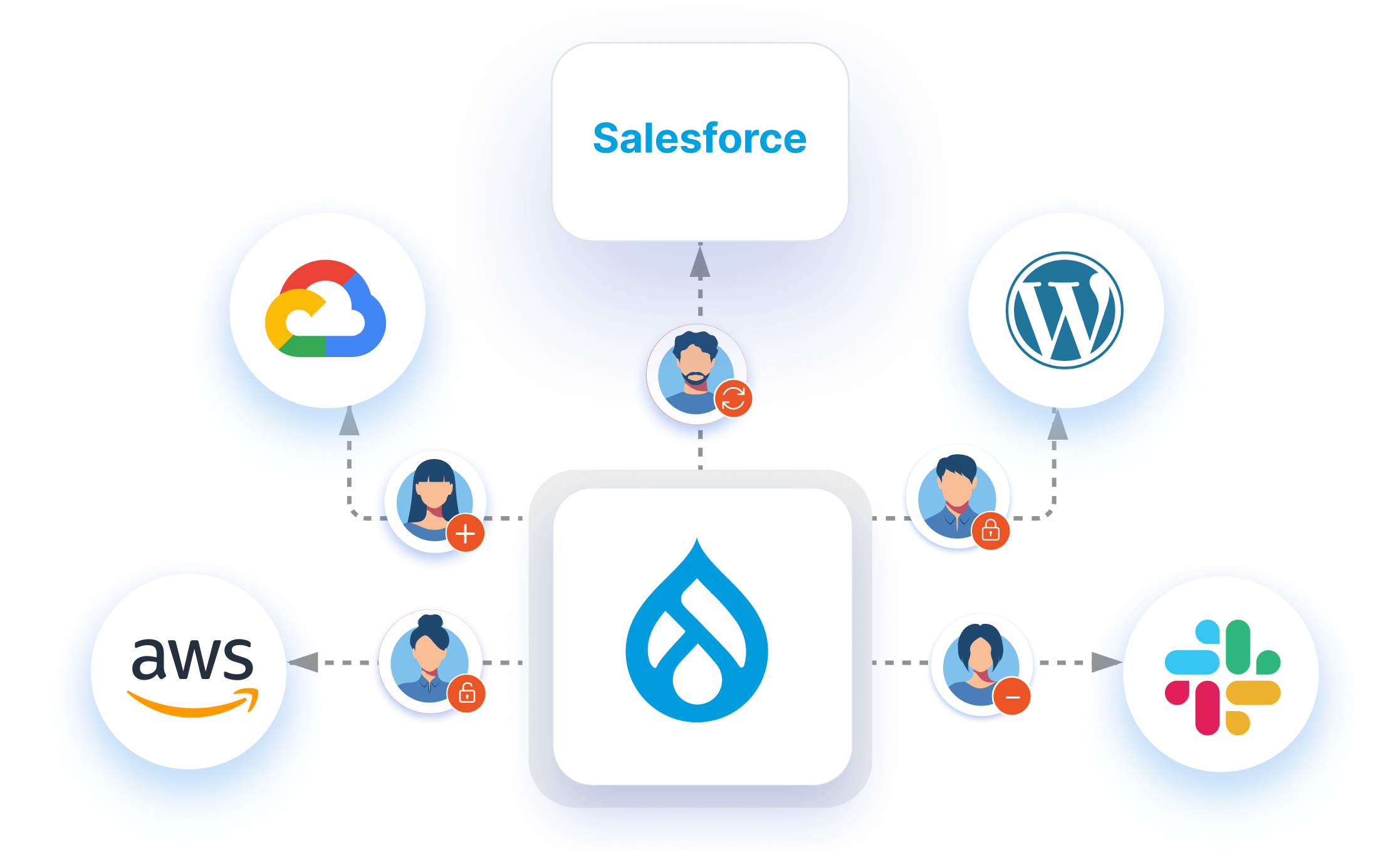
In order to eliminate the erring procedures and make life easier for the employers and teams, automation of all these processes is necessary and therefore put to use. The creation, updation and deletion of User accounts and access policies for multiple systems and applications simultaneously is referred to as User Provisioning.
It is an Identity and Access Management (IAM) solution that refers to automatic synchronization of users on multiple systems concurrently. Effective user provisioning is designed such that it doesn’t utilize too much of the IT team’s time and effort and/or compromise on any of the organization’s confidential information. Speedy and observant allocation and provisioning of digital user identities such that the Users are given access to exactly and precisely what is needed.
Deprovisioning is also one of the integral parts of the IAM processes. As swiftly as the onboarding is made, deboarding can be equally cumbersome. For example - when an employee is set to leave the organization, his/her permissions and access policies have to be immediately revoked without jeopardizing the integrity of confidential organization data or applications that the departing-employee had access to.
When an employee or user has long been part of the organization, it is difficult to determine all the resources that they have access to. Inability of walking back all the access and permissions might result in costly breaches. Automatic repeal of these permissions is facilitated by automated deprovisioning. A complete dashboard view of all the applications and services that a user is logged-into enables quick deprovisioning and therefore can qualify as a crucial security measure.
Why automate User Provisioning?
- Eliminating manual labor definitely helps in cutting costs as well as makes the User Provisioning process more efficient and accurate. It helps getting rid of monotonous onboarding tasks
- Automated User Provisioning streamlines user management across multiple applications and systems, simultaneously removing redundancy of tasks
- It makes operations scalable. It is easier for IT administrators to scale up or down irrespective of the number of users involved in the process.
-
User Provisioning is primarily crucial in safeguarding the systems, applications and data from any possible security breach by ensuring that resources are only accessed by authorized parties.

User provisioning facilitates the management of users and user groups that are logged into an application. When new users have to be provisioned to that application, they are granted the permissions quickly through groups. It also makes deprovisioning easier. For example, all the digital designing team members are in a group called “Design Team”. The “Design team” as a whole is given access to a designing software, when transitioning to another software, the whole group can be deprovisioned from the old software and logged into the newer one. That is the amount of ease user provisioning brings in.
User Provisioning is a one stop solution for streamlining the onboarding and offboarding processes taking into account the integrity and security of confidential data of the organization.
Upon thorough research, only one such User Provisioning module was found in the Drupal Marketplace that provides complete coverage of all the required functionality. The module goes by the name User Provisioning and Sync and is developed as well as managed by miniOrange Inc.
Some of the key features and services offered by the User Provisioning & Sync module that make it whole and vigorous are listed below-
- Acts as a SCIM client
- Acts as a SCIM serve
- Provider specific provisioning
- Provisioning on-demand
- Detailed logs of all the CRUD operations performed
- Real time provisioning
- Scheduler Based Provisioning
 Back to top
Help improve this page
You can:
- Log in, click Edit, and edit this page
- Log in, click Discuss, update the Page status value, and suggest an improvement
- Log in and create a Documentation issue with your suggestion

